


In the early 20th century, women were claiming the right to vote. The pioneers of this were Myrthes de Campos – the first female lawyer to be admitted to the Bar Association of Brazil (OAB) – and Leolinda Daltro – a teacher who in 1910 founded the Female Republican Party. Even being based on Articles 69, 70 and 72 of the 1891 Republican Constitution of Brazil and on the Electoral Code that had been in place since 1904 – which ensured equal rights for all, without excluding women from the concepts of citizenship and the conditions of eligibility – they had their claim denied.
Given the feminist perspective, it is worth noting that the parties and the churches in Brazil stand out as the major trenches of conservatism in favour of maintaining the androcentric culture. Despite preaching democracy, they prefer not to relate it to the transformation of gender relations. It does not take much effort, however, to understand the why of this phenomenon: governed by hierarchy and clientelism, those two institutions remain as bastions of patriarchy striving, through private spaces, control of the female body and through public spaces, for the exclusion of women from political decisions (BUARQUE; VAINSENCHER, 2005).
In this context, Brazilian women had no right to vote and/or be voted for until the second decade of the last century. The oligarchic relations of the Old Republic were in effect, by which predominated the exclusive power of men. The women of Rio Grande do Norte were not excluded from the process of fighting for equal rights, but also were not fully inserted in the process. The change in gender relations emerged when they managed to put through an important demand, which resulted in a major conquest for political and citizens’ rights in South American history: the right to vote and be voted for elective public office.
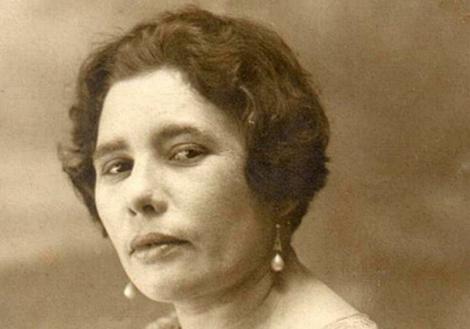
It was in this scenario that Celina Guimarães Viana stood out. She was born in Mossoró, Rio Grande do Norte, on 15 November 1890 to Elisa Aguiar Amorim Guimarães and José Eustachian Amorim Guimarães. She trained as a teacher at the Natal Normal School, and in 1911 married the lawyer and professor Elyseu de Oliveira Viana. In 1914, at the invitation of the director of the State’s Public Instruction, Celina assumed the position of infant teacher at Grupo Escolar 30 de Setembro, in her hometown.
Regarding the Brazilian Constitution, it should be noted that although it was revised in 1926, legislators did not include a provision explicitly enshrining equal rights for both sexes. This led to protest by the then senator Juvenal Lamartine, a candidate for governor who advocated the inclusion of civic rights and duties for men and women, and he sent a telegram to the president. As a result of the protest, house representative Adauto da Câmara then presented in the General Provisions the following amendment of Article 77: In Rio Grande do Norte, all citizens who meet the required conditions by this law can vote and be voted for, without distinction of sex.
On 25 October 1927, State Law No 660 took force, with the Regulate the State Electoral Service amendment, which provided no gender distinction for exercising suffrage and as a basic condition of eligibility. Thus, on 25 November 1927, Celina Guimarães Viana filed a petition calling for her inclusion on the electoral roll. Upon receiving a favourable decision from the judge, she appealed to the president of the Federal Senate so that all women would have the same right. The telegram sent read: I ask in the name of Brazilian women that the bill to institute female voting be passed to safeguard their political rights recognised by the Federal Constitution – Sincerely, Celina Guimarães Viana – Teacher at Mossoró Normal School.
The original document dispatched by judge Israel Ferreira Nunes, written on fountain pen on lined paper with Celina’s name, is in the Lauro da Escóssia History Museum in an advanced state of wear. This is the document that proves the pioneering of Mossoró in women’s voting. There is also a photo exhibition of Celina Guimarães Viana at the museum.
It is important to remember that the first woman to apply for inclusion in voter registration was not Celina. This pioneering feat actually falls to teacher Júlia Alves Barbosa, a university professor at the Natal Normal School, on 24 November 1927. However, due to her being unmarried at the time, the judge of the 1st Court of the Capital delayed the approval of Júlia’s vote, and it was only published in the Official State Gazette on 1 December of that year.
Whatever the outcome of elections, it can be seen that the Rio Grande do Norte suffragette movement had been active since the beginning of the 20th century. Celina’s request was quickly granted by the judge, and contributing to this was the fact that she was married and respected, i.e. a teacher and the wife of a lawyer. For that reason alone, she became the first female voter not only in Rio Grande do Norte and Brazil, but throughout Latin America. And Júlia Alves Barbosa, for not being married that year, was the second woman to vote. As to the question of suddenly becoming an emblematic woman, Celina confessed:
I did nothing! It was the work of my husband, who got excited by the campaign for women’s participation in Brazilian politics and, to be clear, it began with him taking my name in the confusion. I could never think that by signing that voter registration, my name would go down in history. And there are books and newspapers extolling my attitude. The book by João Batista Cascudo Rodrigues – A Mulher Brasileira – Direitos Políticos e Civis [The Brazilian Woman – Civil and Political Rights] – made me famous. Even the Mossoró public records office where I enrolled put a plaque commemorating the event. I am grateful for all of this that I owe exclusively to my late husband.
Prior to the enactment of State Law No. 660, nothing is in fact known about Celina’s actions in the political and civil rights of women, and in particular, the struggle for women’s suffrage. However, it is known that after the enactment of Law, she began to educate women about the importance of voting: she drafted a text, printed it in pamphlet form and distributed to women, asking all to vote and reiterating that such an action contributed to progress in Mossoró. It is noteworthy that only in the next decade was the law expanded to other Brazilian states.
It is important to say that the relevant political gain given to women in Rio Grande do Norte resulted from the feminist demands for equal rights led by São Paulo biologist Bertha Lutz (1894 – 1976). Bertha was one of the most significant feminist leaders in the campaign for women’s suffrage and equal rights for men and women. All these claims encouraged and incited the fight for rights in various parts of Brazil. And it was through this struggle that Bertha Lutz met Celina Guimarães Viana, and they became good friends.
Without a shadow of a doubt, Celina was a woman ahead of her time. As an educator, at a time when the discipline of students was dictated by the paddle, she abolished the mechanism and started to use theatre as a way to attract the attention of young people. She wrote plays, assembled costumes and held presentations at school. For this and other educational initiatives, Celina was included in the Book of Honour of Public Instruction, in recognition of her good services rendered to the State.
Another aspect to register is that Celina was the first person who spread football in Mossoró. The sport was very little known and she, to satisfy the desire of her students, translated the entire game handbook with its rules from English to Portuguese, and with a whistle in her mouth would lead the youngsters to the field to teach them the sport.
All this positive energy contributed to Celina Guimarães Viana having a long life. She died in Belo Horizonte, on 11 July 1972.
Recife, 28 June 2008.
sources consulted
BLOG do Luis Carlos Petroleiro. Disponível em: . Acesso em: 8 maio 2008.
BUARQUE, Cristina; VAINSENCHER, Semira Adler. ONGs no Brasil: da filantropia ao feminismo. Cadernos de Estudos Sociais, Recife, v. 18, n. 1, p. 5-19, jan./jun. 2005.
CELINA Guimarães. Disponível em: <http://www2.uol.com.br/omossoroense/2511/geraldo.htm>. Acesso em: 5 maio 2008.
CELINA Guimarães [Foto nesse texto]. Disponível em: <http://ocponline.com.br/noticias/brasileiras-celebram-83-anos-de-uma-vitoria-o-voto-feminino/>. Acesso: 9 ago. 2016.
MINISTRO Emmanoel homenageia os 80 anos do voto feminino no Brasil. Disponível em: <http://ext02.tst.gov.br/pls/no01/no_noticias.Exibe_Noticia?p_cod_noticia=8175&p_cod_area_noticia=ASCS>. Acesso em: 4 maio 2008.
NASCIMENTO, Geraldo Maia do. Celina Guimarães e os 80 anos da primeira concessão do voto feminino. Disponível em: <http://www2.uol.com.br/omossoroense/251007/conteudo/cotidiano.htm>. Acesso em: 4 maio 2008.
OS oitenta anos do voto de saias na Brasil. Disponível em: <http://www.tre-rn.gov.br/nova/inicial/links_especiais/centro_de_memoria/index.htm>. Acesso em: 5 maio 2008.
SCHUMAHER, Shuma; BRAZIL, Érico Vital (Org.). Dicionário mulheres do Brasil: de 1500 até a atualidade. Rio de Janeiro: Zahar, 2000.
how to quote this text
VAINSENCHER, Semira Adler. Celina Guimarães Viana. In: Pesquisa Escolar. Recife: Fundação Joaquim Nabuco, 2008. Available at:https://pesquisaescolar.fundaj.gov.br/en/artigo/celina-guimaraes-viana/. Accessed: month day year. (Exemple.: Aug. 6, 2009.)